8 Steps to Prepare Your Home for Fire Season
Get practical steps to prepare your home for fire season, reduce wildfire risk, protect your family, and stay insurable with this clear, actionable guide.
That letter in the mail—the one from your insurance company—can change everything. A non-renewal notice feels like a gut punch, leaving you scrambling in a market that’s become almost impossible. It’s a frustrating, confusing, and frankly, scary place to be. But what if you could change the equation? What if you could make your home a better risk, one that insurers are more willing to cover? You can. Taking control starts with understanding your property’s vulnerabilities and addressing them head-on. This guide provides the clear, actionable steps to prepare your home for fire season, turning your frustration into a proactive plan that protects your home and your financial stability.
Pay Less for Home Insurance
and Avoid Non-Renewal?
Our partner, Five Bays Insurance Agency, offers a free policy checkup that spots hidden discounts to make sure you’re not paying more than you should.
Key Takeaways
- Prioritize Ember Defense Above All Else: Your home is far more likely to ignite from small, wind-blown embers than from direct flames. Focus your efforts on the most critical tasks: creating a five-foot, non-combustible zone around your foundation and covering all vents with 1/8-inch metal mesh.
- Your Mitigation Work Is Your Leverage with Insurers: In a tough insurance market, proving you've reduced your home's risk is essential for staying covered. Document every upgrade with photos and receipts to show your provider that you are a responsible homeowner, which can help you maintain your policy and qualify for discounts.
- A Rehearsed Evacuation Plan Is Not Optional: When an evacuation order is issued, you won't have time to think. Protect your family by mapping multiple escape routes, packing a "go-bag" with essentials, and establishing a communication plan before an emergency happens.
What Is Fire Season and Why Does It Matter for Your Home?
The term “fire season” can be misleading. It suggests a predictable, contained period of risk, but for many of us, especially in California, that’s no longer the reality. Wildfire risk has become a year-round concern, driven by changing climate patterns and prolonged droughts. Understanding this new reality is the first step toward protecting what matters most: your family, your home, and your financial stability. Preparing for wildfire isn’t just a seasonal chore anymore; it’s a fundamental part of homeownership in high-risk areas. It’s about taking control in a situation that can feel overwhelming and ensuring you’re ready long before you see smoke on the horizon.
When Is Fire Season?
Traditionally, wildfire season runs from spring to fall, when warmer temperatures and dry conditions create the perfect fuel for fires. However, this window has been expanding. In California, factors like reduced snowpack, earlier spring thaws, and powerful winds can create dangerous fire conditions at almost any time of year. The idea of a distinct "off-season" is fading. Instead, we face a constant state of readiness. This shift means that preparing your home can’t wait until summer. It requires ongoing maintenance and a proactive mindset to reduce your risk, no matter what the calendar says about the current fire outlook.
The Real Cost of Being Unprepared
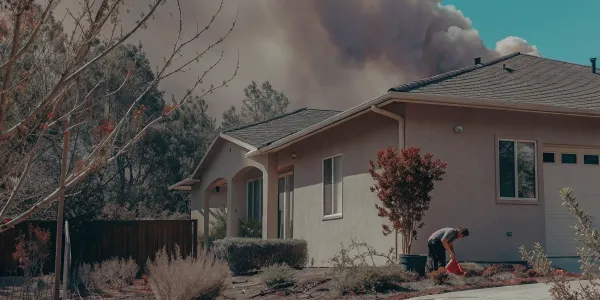
The true cost of a wildfire isn’t just the market value of a house; it’s the loss of a home, irreplaceable memories, and a sense of security. While many homes are lost to wildfires each year, much of this devastation can be prevented. It’s a common misconception that a home has to be in the direct path of a massive wall of flames to be destroyed. In reality, most homes catch fire from small, wind-blown embers that can travel a mile or more ahead of the main fire. These embers get trapped in gutters, under decks, or enter homes through vents, igniting them from within. Understanding this is empowering because it means small, targeted actions can make a huge difference.
How the Insurance Crisis Puts Your Home at Risk
The growing wildfire threat has pushed California’s home insurance market to a breaking point. As insurers face massive losses, many are non-renewing policies in high-risk areas, leaving homeowners scrambling for coverage. This forces many onto the expensive and limited California FAIR Plan, which is meant to be a last resort. On top of this, many homeowners are dangerously underinsured. Your insurance coverage should be based on the true cost to rebuild your home from the ground up in today’s dollars—not its market value or your mortgage balance. With construction costs soaring, a policy that hasn’t been updated in years could leave you with a massive financial gap, unable to rebuild your life after a fire.
Create Defensible Space Around Your Property
Creating defensible space is one of the most effective ways to protect your home from a wildfire. Think of it as a buffer zone you create between your house and the surrounding vegetation. This space is designed to slow or even stop a wildfire’s spread, giving firefighters a safer area to defend your property. It’s not about clear-cutting your land; it’s about strategic landscaping and maintenance. For insurers, a well-maintained defensible space is a clear signal that you are actively reducing your property’s risk, which can be critical for maintaining coverage.
The concept is broken down into three manageable zones, extending out from your home. Each zone has a specific purpose and a clear set of actions you can take to reduce flammable materials and make your property more resilient. By tackling each zone, you systematically build layers of protection that can make all the difference when a wildfire approaches. This is your first and best line of defense, and it’s entirely within your control.
Zone 1: The Ember-Resistant Zone (0-5 feet)
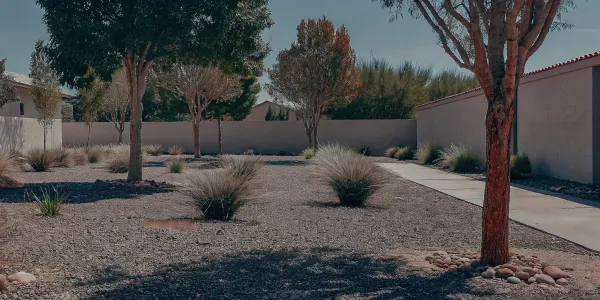
This area immediately surrounding your home is the most critical. The primary goal here is to create a perimeter that won't ignite from embers, which are the leading cause of home loss during a wildfire. You should remove all flammable materials from this zone. Replace wood mulch with non-combustible options like gravel, pavers, or concrete. Clear away any dead leaves, pine needles, and dry grass. This is also the place to move firewood piles and flammable patio furniture. According to the National Fire Protection Association, keeping this five-foot zone completely free of combustibles is essential. Prune any tree branches that hang over your roof or touch the side of your house.
Zone 2: The Lean, Clean, and Green Zone (5-30 feet)
In this intermediate zone, the focus is on interrupting the fire's path and keeping flames small. The landscape should be "lean, clean, and green." This means creating space between trees and shrubs to prevent fire from jumping from one plant to another. Prune the lower branches of mature trees about 6 to 10 feet from the ground to remove "ladder fuels" that can carry a ground fire up into the canopy. Keep your lawn mowed to a height of four inches and ensure plants are healthy and well-irrigated. Regularly rake up leaves, needles, and other dead vegetation. This isn't about removing all plants, but rather about thoughtful spacing and diligent maintenance to reduce fuel.
Zone 3: The Reduced Fuel Zone (30-100 feet)
The goal for this outer zone is to reduce the energy and speed of an approaching wildfire. You don't need to clear the area completely, but you should thin out the vegetation. Remove dead trees, shrubs, and dense undergrowth that could act as heavy fuel. Create horizontal space between the canopies of trees and vertical space between the ground and the lowest tree branches. By thinning the vegetation, you rob an oncoming fire of the fuel it needs to grow in intensity. This makes it easier for firefighters to manage and helps protect your home from the intense heat of a large flame front.
Choose Fire-Resistant Landscaping and Plants
While creating your defensible space zones, the types of plants you choose matter. Fire-resistant plants have moist, supple leaves and a low sap or resin content, making them less likely to ignite. Good choices often include native species that are already adapted to the local climate. Avoid highly flammable plants like juniper, cypress, and some pines, which contain volatile oils and accumulate dead, dry material. However, remember that no plant is truly "fireproof." Even fire-resistant plants require regular maintenance. A well-watered and pruned plant will always be a safer choice than a neglected one. You can find helpful lists of fire-resistant plants to guide your landscaping decisions.
Harden Your Home Against Wildfire
While creating defensible space manages the vegetation around your property, home hardening focuses on the structure of your house itself. The goal is to make your home more resistant to the two primary threats from a wildfire: airborne embers and direct flame contact. Embers are the leading cause of homes igniting during a wildfire, as they can travel a mile or more ahead of the fire front and find their way into small, vulnerable openings.
Making these structural improvements is one of the most effective ways to protect your property and is a key factor insurers consider when assessing your home’s risk. Some of these upgrades are significant projects, while others are simple weekend tasks. By addressing your home’s most vulnerable points—the roof, windows, siding, and vents—you create a protective shell that gives it a fighting chance. A personalized action plan can help you prioritize which steps will have the biggest impact on your specific property.
Install a Fire-Resistant Roof
Your roof is the most vulnerable part of your home because it’s a large, exposed surface where embers can easily land and accumulate. The best defense is a Class A fire-rated roof. According to CAL FIRE, you should choose fire-resistant materials like composite shingles, metal, concrete, or clay tiles. If you have a tile roof, it's also important to seal any gaps between the tiles and the roof deck to block embers from getting underneath. Regular maintenance is just as crucial as the material itself—always keep your roof and rain gutters clear of flammable debris like pine needles, leaves, and branches.
Upgrade to Heat-Resistant Windows and Doors
The intense heat from a wildfire can cause single-pane windows to break, giving embers a direct path into your home. Upgrading to double-pane windows, with at least one pane made of tempered glass, provides significantly more protection. Tempered glass is much stronger and more resistant to shattering from heat. If possible, try to limit the number and size of windows that face large areas of vegetation. For doors, a solid-wood door offers more protection than a hollow-core one. Also, ensure your weather stripping is in good condition to help seal gaps where embers could enter.
Choose Fire-Resistant Siding and Walls
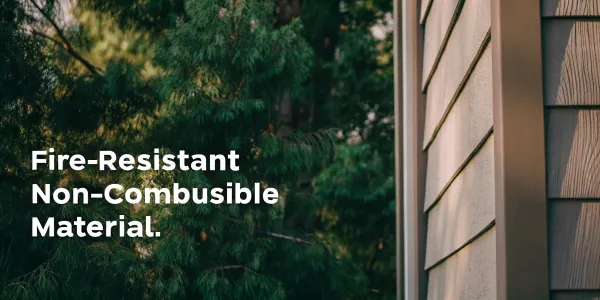
Your home’s siding is its primary defense against direct contact with flames. Materials like wood shingles or vinyl can ignite easily. For the best protection, use non-combustible or ignition-resistant materials such as stucco, fiber cement, brick, or treated wood. It’s critical that these materials cover your walls completely from the foundation up to the roof eaves, leaving no gaps. If you have a raised foundation, make sure to enclose the underside of your home with a fire-resistant material to prevent flames and embers from getting underneath the structure.
Secure Vents and Gutters from Embers
Vents in your attic, foundation, and eaves are open invitations for wind-blown embers. You can secure these entry points by covering all vent openings with fine metal mesh screens with openings no larger than 1/8 inch. Avoid using plastic or fiberglass screens, as they can melt or burn in high heat. Gutters are another weak point because they trap leaves and pine needles, creating a perfect bed for embers. Keep them clean throughout the year, and consider installing metal gutter guards to prevent debris from building up in the first place.
What Regular Maintenance Reduces Your Fire Risk?
After you’ve hardened your home and established defensible space, the work isn’t over. Wildfire preparedness isn’t a one-time project; it’s an ongoing commitment to maintaining your property. Regular maintenance is what keeps your home safe season after season, preventing small oversights from turning into major vulnerabilities. Think of it as essential upkeep, just like cleaning your house or servicing your car. These routine tasks are often simple and low-cost, but they play a massive role in reducing the chances of ignition, especially from wind-blown embers, which are responsible for igniting the majority of homes during a wildfire.
Insurers also pay close attention to a property’s upkeep. A well-maintained home signals that you are actively managing your risk, which can be a key factor in keeping your coverage. By consistently clearing debris, managing vegetation, storing flammable items correctly, and checking your safety equipment, you are building layers of protection that make your home more resilient. Keeping track of these tasks can feel like a lot, but a structured approach makes it manageable. You can create your free Wildfire Action Plan to build a personalized checklist and stay on top of your home's safety year-round.
Clear Flammable Debris Seasonally
One of the most effective things you can do to protect your home is to eliminate fuel for embers. Dry leaves, pine needles, twigs, and dead grass are like kindling, waiting for a spark to land. Your roof and gutters are particularly vulnerable spots where this debris can accumulate. A seasonal cleaning is critical—don’t wait until you see a plume of smoke on the horizon. Make it a habit to clear your roof and gutters in the spring before fire season begins and again in the fall after leaves have dropped. Also, pay close attention to the area immediately around your foundation and under your deck, as these are places where embers can gather and ignite your home from the ground up.
Manage and Prune Vegetation
Healthy, well-maintained plants can be part of a fire-resistant landscape, but overgrown or poorly placed vegetation creates a direct path for flames to reach your house. Fire can climb "ladder fuels"—low-lying shrubs and low-hanging tree branches—to reach higher limbs and eventually your roof. To break this chain, trim tree branches so they are at least 10 feet away from your chimney and roofline. It’s also important to remove lower branches on mature trees, typically up to 6 to 15 feet from the ground, to prevent a surface fire from spreading into the tree canopy. Regularly prune shrubs and keep your lawn mowed and watered to ensure your landscape remains a buffer, not a liability.
Store Flammable Materials Safely
Many everyday items stored around our homes can pose a significant fire risk. Firewood stacks, propane tanks, and cans of gasoline can intensify a fire and endanger your property and firefighters. Your firewood pile should be moved at least 30 feet away from your house and any other structures, preferably uphill. Store gasoline and other flammable liquids in approved safety cans and keep them in a detached shed or garage, away from main living areas. Propane tanks for your grill should also be kept a safe distance from your home, ensuring you can access the shut-off valve in an emergency. Taking these simple storage precautions removes potent fuel sources from your home’s immediate vicinity.
Install and Maintain Safety Equipment
Embers are tiny but incredibly destructive. They can travel a mile or more ahead of a wildfire and enter your home through the smallest openings. To stop them, you need to secure these entry points. Install 1/8-inch metal mesh screens over all vents—in your attic, foundation, and under eaves—to block embers while maintaining airflow. On your chimney, a spark arrester with a screen no larger than 1/2-inch is essential for stopping sparks from escaping. Don’t forget your garage; weather stripping around and under the door can seal gaps where embers could blow in. Finally, make sure your garage door opener has a battery backup so you can still get your car out during a power outage.
Plan Your Family's Evacuation
When you get an evacuation order, the last thing you want is to be scrambling. Panic and confusion can set in quickly, making it hard to think clearly. That’s why having a well-rehearsed evacuation plan is one of the most important things you can do to protect your family. This isn't just about knowing when to leave; it's about knowing how to leave safely and efficiently. A good plan removes the guesswork during a high-stress moment.
Your plan should cover every detail, from the specific routes you’ll take to how you’ll communicate with loved ones if you get separated. It also includes having your essential items packed and ready to go so you aren't wasting precious minutes searching for medications or important documents. Thinking through these steps now, when things are calm, gives you a clear, actionable guide to follow when every second counts. A detailed Wildfire Action Plan can help you organize these details so your family is prepared to act decisively.
Map Multiple Escape Routes
Your primary route out of the neighborhood might not be available during a wildfire. Roads can be blocked by fire, fallen trees, or emergency vehicles. That’s why you need to identify at least two or three different escape routes from your home. Physically drive these routes with your family so everyone is familiar with them. Note any potential bottlenecks or alternative roads you could take.
Your plan should also include knowing the location of your home’s utility shut-offs. In some cases, you may be instructed to turn off your gas, electricity, and water before you leave. Make sure everyone in your household who is old enough knows where these are and how to operate them safely.
Know the "5 Ps" of Evacuation
When time is short, you need to prioritize. A helpful way to remember what to take is the 5 Ps of Evacuation:
- People: Account for everyone in your household and make sure they are ready to go. This also includes checking on any neighbors who might need assistance.
- Pets: Your pets are part of the family. Have their carriers, leashes, food, and medications ready.
- Prescriptions: Gather all necessary medications, eyeglasses, and any other critical health supplies.
- Papers: Grab important documents like passports, birth certificates, social security cards, and insurance policies. Having digital copies backed up to the cloud is also a great idea.
- Priceless items: This includes irreplaceable photos, family heirlooms, and external hard drives with personal data.
Establish a Communication Plan and Meeting Point
During a wildfire, cell towers can become overloaded or damaged, making it difficult to communicate. Don’t rely on being able to call each other. Your family needs a communication plan that works even when technology fails. Designate an out-of-state friend or relative as a central point of contact. It’s often easier to make a long-distance call than a local one during an emergency. Have everyone check in with that person.
You should also establish two meeting points in advance. The first should be a safe spot nearby, like a neighbor’s house or a landmark at the end of your street. The second should be a location outside your neighborhood, such as a library, community center, or a relative’s home, in case you can’t return to the area.
Assemble Your Emergency "Go-Bag"
Your "go-bag" is a pre-packed emergency kit that you can grab without a second thought. Every person in your household, including children, should have one tailored to their needs. Store them in a cool, dry place where they are easy to access, like a hall closet or in your car.
Your kit should contain essentials to last for at least 72 hours. According to Ready.gov, a basic emergency kit should include water and non-perishable food, a flashlight, a battery-powered or hand-crank radio, a first-aid kit, and extra batteries. Also, pack copies of important documents, cash, medications, pet supplies, and a local map in case GPS is unavailable. A portable power source for charging your phone is also a critical item.
How Does Fire Prep Affect Your Home Insurance?
Taking steps to protect your home from wildfire does more than just give you peace of mind—it directly impacts your relationship with your insurance provider. In a market where non-renewals and soaring premiums are the new normal, demonstrating that you are actively reducing your property’s risk is one of the most powerful moves you can make. Insurers are in the business of managing risk, and a well-prepared home is simply a better bet. They use sophisticated tools, including satellite imagery and risk-scoring algorithms, to decide who to cover and what to charge. A property with overgrown vegetation right up to the house or a wood shake roof will get flagged immediately.
This is where you can take back some control. By hardening your home and creating defensible space, you’re not just protecting your house; you’re protecting your ability to insure it affordably. Every mitigation project you complete changes your home’s risk profile for the better. It makes your property an outlier—in a good way. When an underwriter reviews your file and sees a Class A roof, clear defensible space, and ember-resistant vents, you become a much more appealing customer. Think of every action you take as an investment in your home’s safety and your financial stability, proving that your property is worth the risk.
Qualify for Wildfire Insurance Discounts
Many insurance companies now offer discounts to homeowners who take proactive steps to reduce their wildfire risk. These aren't just token savings; they can significantly lower your annual premium. Insurers recognize and reward actions like creating defensible space, installing a Class A fire-rated roof, and using fire-resistant building materials. California has even implemented a statewide program requiring insurers to offer discounts for specific mitigation efforts. Under the state’s Safer from Wildfires framework, companies must provide savings for dozens of actions at the home, property, and community level. By taking these recognized steps, you prove to your insurer that you are a lower-risk policyholder, making you a more attractive customer in a very tight market.
Document Your Work for Your Insurer
Simply doing the work isn't always enough—you need to prove it. Meticulously documenting your fire preparation measures is critical for getting the credit you deserve from your insurer. Keep a detailed file with before-and-after photos of your defensible space clearing, receipts for fire-resistant materials, and invoices from contractors who performed upgrades like installing new vents or a Class A roof. This documentation is your evidence when applying for a new policy, renewing an existing one, or requesting a discount. Some programs, like the Wildfire Prepared Home designation, offer a professional certification that can be a powerful tool when speaking with your agent. This record-keeping also helps ensure your policy coverage reflects the true cost to rebuild your home with its improved, fire-resistant features.
Steps to Stay Insurable in a High-Risk Area
Maintaining your insurance coverage in a high-risk area is an ongoing commitment, not a one-time project. Insurers regularly reassess the risk of the properties they cover, so consistent maintenance is key to staying in their good graces. This means regularly cleaning your roof and gutters of flammable debris like pine needles and leaves, especially before fire season begins. It also involves annually maintaining your defensible space to keep vegetation lean, clean, and green. These actions show your insurer that you are a responsible homeowner actively managing your risk. When it comes time for renewal, a well-maintained property is far less likely to be flagged for non-renewal. Using a structured tool like the Wildfire Action Plan can help you stay on top of these essential tasks year after year.
Avoid These Common Fire Prep Mistakes
Even the most well-intentioned homeowners can make critical mistakes when preparing for wildfire season. Misinformation and common assumptions can leave dangerous gaps in your defenses. Understanding these pitfalls is the first step toward creating a truly effective safety plan that protects your family, your home, and your financial future. It’s not just about doing the work; it’s about doing the right work.
Defensible Space Errors to Watch For
One of the most dangerous mistakes is neglecting the area immediately surrounding your home. That first five feet from your foundation is the most critical zone. Many people clear brush 30 feet away but leave a woodpile stacked against the siding or place flammable mulch in flowerbeds. If a fire ignites in this zone, it can get hot enough to crack your windows, allowing embers to enter and burn your house from the inside out. Think of this five-foot perimeter as a non-combustible bubble. You must create defensible space by removing anything that can burn, from dead leaves to patio furniture.
Dangerous Insurance Coverage Assumptions
Many homeowners don't realize their insurance policy isn't set up to cover the full cost of rebuilding. A common, and costly, assumption is that your coverage amount should be based on your home's market value or your mortgage balance. Instead, your policy should reflect the true cost to rebuild from the ground up at today's labor and material prices. You also need to be prepared to document everything you own after it's gone. Unlike life insurance, you must prove your losses. Start a detailed home inventory now with photos and videos, and store it in the cloud.
Critical Gaps in Emergency Planning
Thinking you're safe because you don't live deep in a forest is a widespread misconception. Embers are the primary cause of home ignition during a wildfire and can travel a mile or more ahead of the main fire front, threatening homes in suburban neighborhoods. Another gap is not checking the fine print of your insurance policy. Some policies cover the cost of temporary housing if you’re evacuated, but many don't. Finally, a vague idea to "leave when it's time" is not a plan. You need multiple escape routes mapped out and a "Go-Bag" ready, because when an evacuation order comes, you won't have time to think.
DIY vs. Hiring a Pro for Fire Preparation
Deciding how to prepare your home for wildfire season can feel like a huge undertaking. It’s easy to get overwhelmed by the checklists and the potential costs. The good news is that you don’t have to do everything at once, and you don’t have to do it all alone. The most effective approach is often a mix of projects you can handle yourself and larger jobs best left to a professional.
Generally, tasks related to creating and maintaining defensible space are manageable for most homeowners. These are often lower-cost, high-impact activities that involve clearing and managing the vegetation around your property. On the other hand, home hardening—modifying the structure of your house to resist embers and flames—frequently requires a licensed contractor. Knowing the difference will help you create a realistic plan and budget that protects your home and family. You can start building a clear, step-by-step strategy with a personalized Wildfire Action Plan.
When to Hire a Contractor for Home Hardening
Some home protection projects are complex, require specialized skills, and must meet strict building codes to be effective. For these jobs, hiring a licensed contractor is a must. A pro ensures the work is done correctly, safely, and in a way that your insurance company will recognize.
Consider calling a professional for major structural upgrades like replacing your roof with a Class A fire-rated material, which offers the highest level of protection. Other critical projects for a contractor include installing dual-pane tempered glass windows, which are more resistant to breaking from heat, and replacing siding with non-combustible materials like fiber cement. A contractor can also properly enclose eaves and soffits to prevent embers from getting trapped and igniting your attic. These are significant investments that directly impact your home’s ability to survive a wildfire, and getting them right is essential.
Cost-Effective DIY Mitigation Projects
You can make a huge difference in your home’s safety with some simple, low-cost weekend projects. Most of these tasks focus on maintenance and clearing the area immediately surrounding your home, which is the most vulnerable to ignition from flying embers. One of the most important DIY jobs is to regularly clean your roof and gutters of leaves, pine needles, and other flammable debris.
Creating a five-foot "ember-resistant zone" directly around your home is another critical task. This means removing flammable mulch, dead plants, and firewood stacks from against the house. You can also trim tree branches so the lowest limbs are 6 to 10 feet off the ground and remove any dead vegetation from your yard. Another manageable project is installing 1/8-inch metal mesh screens over vents to block embers from entering your home. These consistent efforts are fundamental to wildfire defense and are often the first things an insurance inspector will look for.
The Value of Certifications and Inspections
After you’ve put in the work, how do you prove it to your insurance company? This is where official certifications and professional inspections come in. Documenting your mitigation efforts is key, but having a third-party expert validate them adds a powerful layer of credibility that can help you secure or maintain coverage and potentially qualify for discounts.
Programs like the Wildfire Prepared Home designation from the Insurance Institute for Business & Home Safety (IBHS) provide a clear set of standards and a verifiable process. Even if you don't go through a formal program, hiring a certified wildfire risk assessor can provide a detailed report outlining your home's strengths and weaknesses. This report not only gives you a clear action plan but also serves as powerful documentation for your insurer. Think of it as an investment in peace of mind and a practical tool for navigating the challenging insurance market.
Your Year-Round Fire Prep Timeline
Wildfire preparedness isn’t a one-and-done project you tackle in a single weekend. It’s a year-round commitment to protecting your home and family. Thinking about it seasonally breaks the work into manageable steps, helping you stay ahead of the risk without feeling overwhelmed. From clearing defensible space in the spring to maintaining your home in the summer and keeping your emergency plans fresh all year, this timeline will guide you.
Consistent effort is what makes a difference to your safety and can even impact your ability to get and keep home insurance. By turning these tasks into regular habits, you build layers of protection that make your property more resilient when a wildfire threatens. Let’s walk through what you should be focusing on throughout the year.
Spring Preparation Checklist
Spring is your window to get the most critical work done before the landscape dries out and fire season begins. Your top priority should be creating and maintaining defensible space, which is the buffer you create between your home and the surrounding vegetation. Start with the area closest to your house, the 0-5 foot ember-resistant zone. This space needs to be completely free of flammable materials. Clear away all dry leaves, pine needles, mulch, and firewood piles. This simple step can stop embers from igniting your home.
Summer Maintenance Tasks
As temperatures rise, your focus should shift to home hardening and ongoing vegetation management. Embers are a wildfire’s most dangerous weapon, so your goal is to seal off any entry points. Regularly clean debris from your gutters and roof. Check that all attic and foundation vents are covered with a 1/8-inch metal mesh screen to block embers from getting inside. If you’re considering a new roof, make sure it’s a Class A fire-resistant material. Continue to manage your property by keeping your lawn watered and mowed, and trim any tree branches that are getting too close to your roof or chimney.
Year-Round Readiness Habits
True preparedness is a habit, not a project. Throughout the year, you should keep your property tidy and your emergency plans current. Make sure a garden hose is always connected and ready to use. More importantly, your family’s safety depends on having a solid plan. Develop and practice a family disaster plan that outlines multiple escape routes, utility shut-off locations, and emergency contacts. You should also assemble an emergency kit with essentials like water, food, medications, and important documents. A personalized Wildfire Action Plan can help you track these details so you’re ready to act at a moment’s notice.
Related Articles
- SoCal Wildfire Insurance Readiness: A Complete Guide
- Your Essential NorCal Wildfire Preparedness Plan
- Wildfire Prevention for Northern California Homeowners
- Wildfire Risk Insurance: A Complete Guide
Pay Less for Home Insurance
and Avoid Non-Renewal?
Our partner, Five Bays Insurance Agency, offers a free policy checkup that spots hidden discounts to make sure you’re not paying more than you should.
Frequently Asked Questions
I'm overwhelmed by all this information. What is the single most important thing I should do first? Start with the five feet immediately surrounding your home. This "ember-resistant zone" is your most critical line of defense, and clearing it is a manageable weekend project. Remove anything that can burn: wood mulch, dead leaves, pine needles, and even flammable patio furniture. Creating this non-combustible buffer right against your foundation is the highest-impact action you can take to prevent embers from igniting your house.
My insurance company already sent me a non-renewal notice. Is it too late to make these changes? Absolutely not. While a non-renewal is frustrating, taking action now makes your home a better risk for any insurance company. Documenting your mitigation work, like clearing defensible space and installing ember-resistant vents, gives you powerful evidence to shop for a new policy. It shows providers that you are proactively managing your risk, which can make all the difference in securing new coverage.
These home hardening upgrades sound expensive. Will I really save enough on my insurance to make it worthwhile? It's best to think of home hardening as an investment in protecting your property, with insurance savings being a long-term benefit. While a discount may not cover the full cost of a new roof in the first year, the primary goal is to prevent a total loss of your home. These upgrades make your home more resilient and, just as importantly, help you stay insurable in a tough market, which protects your financial stability for years to come.
I don't live deep in a forest, so why is this so important for my suburban home? Most homes lost in a wildfire are not burned by the main wall of flames but by small, wind-blown embers that can travel a mile or more ahead of the fire. These embers land in gutters, get sucked into vents, or pile up against siding, igniting homes far from the actual fire front. This is why creating defensible space and hardening your home is just as critical in a subdivision as it is in a rural canyon.
What's the real difference between "defensible space" and "home hardening"? Think of it this way: defensible space is about managing your yard, while home hardening is about strengthening your house. Defensible space involves clearing vegetation to rob an approaching fire of its fuel. Home hardening focuses on the structure itself—upgrading your roof, windows, and vents to make them resistant to embers and flames. You need both to give your home the best possible chance of survival.